The Benefits of Pet Therapy in Care Homes
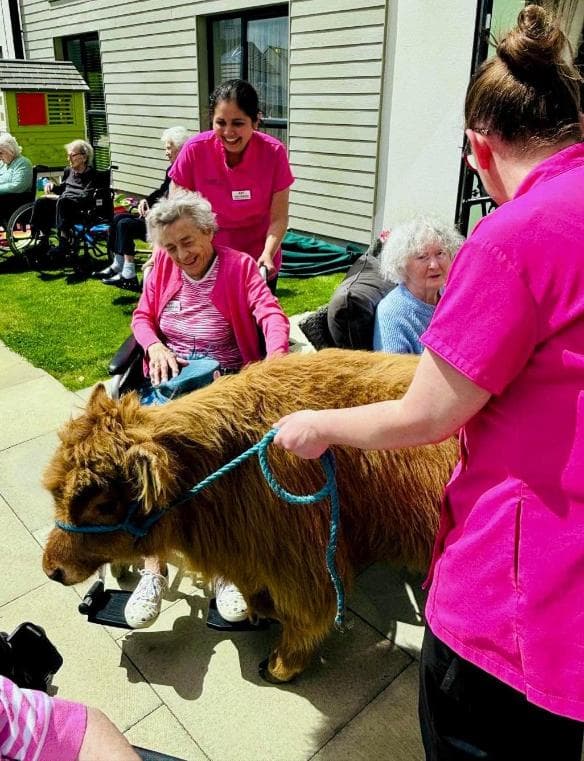
Moving into a care home is a significant life change. Alongside personalised care, comfortable surroundings and meaningful activities, emotional wellbeing plays a vital role in helping residents feel settled and fulfilled. One approach that has grown in popularity across the UK is pet therapy.
Pet therapy, sometimes referred to as animal-assisted therapy, involves safe, supervised interactions between residents and specially trained animals. Whether it is a gentle dog visiting for cuddles, a calm therapy cat, or even smaller animals brought in for sensory sessions, these moments can have a remarkable impact.
For families exploring care homes in Aberdeen, understanding how something as simple as time with an animal can enhance quality of life is reassuring and often heart warming.
What Is Pet Therapy in a Care Home?
Pet therapy in care homes usually involves regular visits from trained therapy animals and their handlers. These sessions are carefully planned to ensure safety, comfort and enjoyment for everyone involved.
Unlike a household pet that lives permanently in the home, therapy animals are assessed for temperament and suitability. They are calm, friendly and comfortable around different environments. Staff remain present during sessions to support residents and ensure positive experiences.
Some care homes may also incorporate animal-themed activities, sensory sessions or outdoor wildlife engagement as part of their wider wellbeing programme.
Emotional Benefits of Pet Therapy
One of the most noticeable effects of pet therapy is the emotional lift it provides.
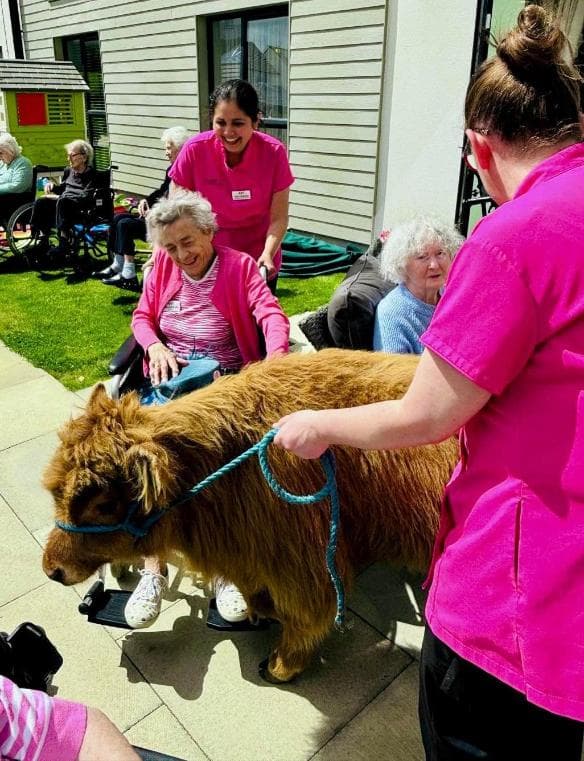
Spending time with animals can reduce feelings of loneliness and isolation. For residents who may miss a pet they once owned, interacting with a friendly animal can bring comfort and familiarity. Stroking a dog or holding a small animal often sparks conversation, laughter and shared memories.
There is also evidence that contact with animals can help reduce anxiety and lower stress levels. The simple act of petting an animal can promote relaxation and create a calming atmosphere, particularly beneficial for residents who may feel unsettled or nervous in new surroundings.
For individuals living with dementia, animals can be especially powerful. They can encourage engagement, improve mood and sometimes unlock memories from earlier life. A resident who is usually quiet may begin speaking about past pets or farming experiences, creating meaningful moments of connection.

Supporting Physical Wellbeing
Pet therapy is not only emotionally supportive. It can also gently encourage physical activity.
Residents may be motivated to walk a short distance to greet a visiting dog or participate in light movement during an interactive session. Even small movements, such as reaching out to stroke an animal can support coordination and maintain motor skills.
Physical touch also plays an important role in human well-being. Safe, supervised contact with animals provides a sense of warmth and reassurance that can be deeply comforting.
Encouraging Social Interaction
Care homes are communities, and shared experiences help build friendships. Pet therapy sessions often become social occasions where residents gather together.
Conversations naturally flow when an animal is present. Residents compare stories of past pets, talk about their childhood or simply enjoy watching the reactions of others. These shared moments strengthen bonds and create a sense of belonging.
For new residents, joining an activity centred around animals can feel less intimidating than structured group discussions. It provides an easy starting point for connection.


The Impact on Residents Living with Dementia
For those living with dementia, familiar sensory experiences can be incredibly grounding. The texture of fur, the sound of gentle breathing, or the sight of a calm animal can create a soothing environment.
Animals do not judge, rush or demand complex communication. This makes interactions feel safe and pressure free. Residents who may struggle with words can still express affection through touch and facial expressions.
In some cases, pet therapy can reduce agitation and improve overall mood, contributing to a more peaceful daily routine.
A Holistic Approach to Care
The best care homes understand that wellbeing goes beyond medical support. Emotional, social and psychological health are just as important as physical care.
In a well-rounded environment, pet therapy sits alongside personalised care plans, engaging activities and comfortable surroundings. It reflects a commitment to treating residents as individuals with rich histories, interests and emotional needs.
At Woodlands Care Home, holistic care means recognising the value of experiences that bring joy and comfort. Within a warm and welcoming community, residents benefit from tailored residential, nursing, dementia and respite care, supported by thoughtful activities designed to enrich daily life.
Finding the Right Environment in Aberdeen
If you are searching for care homes in Aberdeen, it can be helpful to ask about wellbeing initiatives alongside clinical care. Understanding how a home supports emotional health, encourages social connection and creates meaningful experiences can give you confidence in your decision.
Pet therapy is just one example of how care homes can nurture happiness, reduce anxiety and support independence in later life.
To learn more about life at Woodlands Care Home in Aberdeen and how we create uplifting, person-centred experiences for our residents, get in touch with our friendly team to arrange a visit and see our warm community for yourself.